

How Does the 2026 Toyota Camry’s Regenerative Braking Feel in Bossier City, LA?
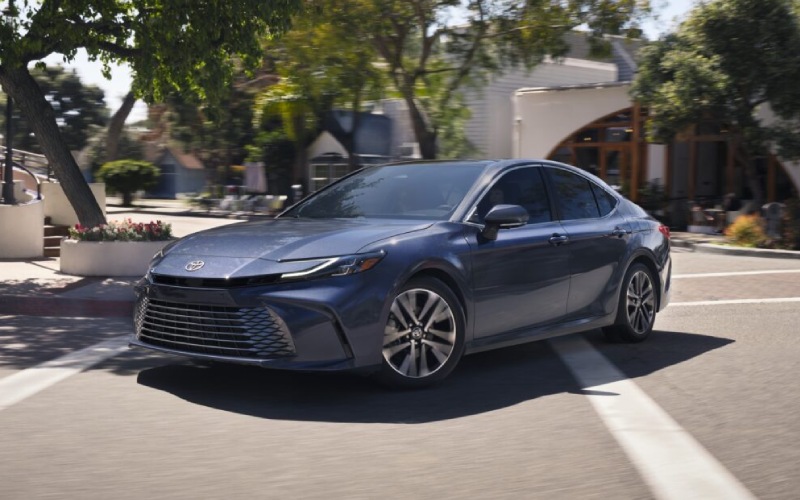
Yokem Toyota – How Does the 2026 Toyota Camry’s Regenerative Braking Feel in Bossier City, LA?
Shoppers around Bossier City ask how the 2026 Toyota Camry’s hybrid braking feels in everyday traffic, especially on Airline Dr., East Texas St., and the I-20 corridor into Shreveport. Because the 2026 Camry is all-hybrid across the lineup, understanding its regenerative braking is a real-world ownership question—how it stops, how smooth it feels, and what it means for long-term brake maintenance in our mix of stoplights, bridge descents, and sudden downpours.
What regenerative braking is—and how the 2026 Camry uses it
Regenerative braking in the 2026 Camry converts your car’s motion back into electricity to recharge the hybrid battery. When you press the brake pedal lightly to moderately, a motor-generator helps slow the car while recapturing energy; the system blends in the conventional hydraulic (friction) brakes as needed for confident, predictable stopping. Toyota calibrates this brake-by-wire system so the pedal feels natural, with consistent response as speed drops and as road conditions change.
Because it’s all standard hybrid power for 2026, this smooth, efficient braking character is part of every Camry grade. You still get satisfying response—up to 225 net combined horsepower in front-wheel drive or up to 232 net combined horsepower with available Electronic On-Demand All-Wheel Drive (AWD)—and an up to 51 combined EPA-estimated mpg rating, all while the braking system is quietly working to stretch efficiency in traffic.
- Initial pedal take-up: The first part of the pedal typically leans on regeneration, so the car slows cleanly without a grabby feel.
- Blended confidence: As you press deeper—or during quicker stops—the system adds friction braking for strong, linear deceleration.
- Low-speed smoothness: At parking-lot speeds and final roll-to-stop, calibration keeps the transition refined and steady.
- Consistent in rain: ABS and stability systems manage traction while regen contributes when available, keeping pedal feel familiar.
- All-day comfort: The smoothness reduces fatigue on commutes across Airline Dr. and Benton Rd. with frequent lights.
Stop-and-go in Bossier City: what you’ll notice day to day
In dense weekday traffic near the Pierre Bossier Mall or along Airline Dr., gentle pedal inputs will do most of the work via regeneration. That means fewer abrupt shifts in deceleration, a calmer cabin, and less brake dust on your wheels. On the flip side, when you need a decisive stop—say a sudden yellow at Shed Rd.—the friction brakes step in instantly for authoritative braking power.
Drive modes can slightly color the experience. Normal Mode is the default and feels intuitive. Eco Mode remaps throttle and climate settings to emphasize efficiency, and it pairs nicely with light, consistent braking in congestion. Sport Mode sharpens acceleration response; braking feel remains confidently linear. EV Mode lets you glide on battery power at low speeds for short distances—handy in neighborhoods or parking garages—while regenerative braking still captures energy when you ease into the pedal.
Bridges, hills, and longer descents around the Red River
On longer downhill sections, such as approaches to the Shreveport-Barksdale Bridge or Jimmie Davis Bridge, the Camry will prioritize regeneration to help control speed and capture energy. If the hybrid battery nears a full charge on an extended descent, the system smoothly increases reliance on friction brakes to maintain your set deceleration. The pedal feel is engineered to stay consistent through this handoff, so you focus on your line and traffic, not on what the system is doing in the background.
Brake wear and maintenance: what owners should plan for
Because the hybrid system often slows the car electrically, friction brakes can last longer than on many non-hybrid sedans. That benefit depends on driving style and conditions, but most Camry hybrid owners appreciate the reduced wear during urban and suburban use. Even so, routine inspections are essential—moist Gulf humidity, seasonal pollen, and road grit can still affect pads and rotors over time.
Our Toyota-trained technicians at Yokem Toyota handle hybrid braking systems daily. We follow Toyota procedures, use Genuine Toyota parts, and inspect everything from pad thickness to caliper slide operation. When you purchase or lease a new Toyota, ToyotaCare includes factory scheduled maintenance for a set period and mileage, which typically features multipoint inspections—an ideal time to have us check your brakes. For quick visits, our Express Maintenance lane can take care of inspections and rotations efficiently so you can get back on the road.
- Look ahead and lift early: Anticipating lights and easing into the brakes maximizes regenerative energy capture.
- Use smooth, steady pressure: Progressive pedal input keeps deceleration linear and comfortable for passengers.
- Mind your tires: Proper inflation supports consistent traction and braking in wet or hot conditions.
- Pick Eco Mode in heavy traffic: It complements a relaxed pace and helps the hybrid system do its best work.
- Keep inspections on schedule: We’ll check pad wear, rotors, and brake fluid condition during service visits.
Rain, humidity, and confidence on local roads
Northwest Louisiana can serve up sudden downpours, especially along I-20 and the Arthur Ray Teague Pkwy. The 2026 Camry’s braking feel remains reassuring in the wet: regenerative braking contributes when traction allows, and the system seamlessly emphasizes friction braking when roads are slick. Stability and ABS systems manage wheel slip, while features within Toyota Safety Sense™ 3.0—like the Pre-Collision System with Pedestrian Detection—can provide braking support in certain conditions. Available Electronic On-Demand All-Wheel Drive (AWD) enhances traction on acceleration, and the braking character remains consistent whether you choose FWD or AWD.
As with any vehicle, hydroplaning can occur if water depth and speed overwhelm tire grip. Good tires and appropriate speeds are your best defenses, and our team can help you choose the right fit at the Yokem Toyota Tire Center.
Take a focused test drive with us
Nothing replaces pedal time. When you stop by our showroom in Shreveport—just across the river from Bossier City—we can map a route demonstrating the Camry’s regenerative braking in familiar settings. Try a parking-lot glide, a neighborhood loop, and a few stop-to-stop runs on Airline Dr. to feel how naturally the pedal responds. We can also walk you through the available 12.3-in. Digital Gauge Cluster setup, show you where EV Mode lives on the console, and pair your phone to wireless Apple CarPlay® or Android Auto™ so your test drive feels like your daily drive.
- Low-speed roll-offs: Practice gentle stops in a lot to sense the smooth final few miles per hour.
- Progressive braking: From about 45 mph, try a steady, medium-pressure stop to feel the blended response.
- Bridge descent: Experience how the car maintains control and captures energy on a mild downhill.
- Neighborhood EV Mode: Glide quietly at low speeds and test how the pedal feels engine-off.
- Stop-and-go loop: Hit a series of lights to see how relaxed the Camry feels in real traffic.
Frequently Asked Questions:
Do I need to change how I brake to “use” regeneration?
No—just drive normally. Light, progressive pedal inputs maximize energy capture, but the system is fully automatic. If you need a quick or hard stop, the friction brakes engage immediately for strong deceleration.
Will emergency stops feel different in a hybrid?
In hard or emergency braking, the Camry prioritizes hydraulic braking, supported by ABS and Brake Assist. Pedal feel remains confident, and Toyota Safety Sense™ 3.0 can provide additional braking support in certain scenarios via the Pre-Collision System with Pedestrian Detection.
Does choosing Electronic On-Demand AWD change the brake pedal feel?
Not in a way most drivers notice. Whether FWD or available AWD, the system blends regeneration and friction braking seamlessly to deliver a natural, consistent pedal.
What happens on a long downhill if the hybrid battery fills up?
The system smoothly shifts toward friction braking to maintain your chosen deceleration. Toyota’s calibration keeps the pedal feel steady as this transition occurs.
Can any shop service hybrid brakes, or should I visit a Toyota dealer?
Standard brake components are familiar, but hybrid systems and control logic are specific to Toyota. Our Toyota-trained technicians follow factory repair procedures and use Genuine Toyota parts, which helps ensure proper performance and long-term confidence.
If you’re comparing sedans for everyday drives from Bossier City into Shreveport, the 2026 Toyota Camry’s regenerative braking delivers the kind of smooth control and efficiency that makes traffic more manageable and weekends more relaxed. Visit us at Yokem Toyota to experience the pedal feel for yourself, explore available tech like the 12.3-in. Digital Gauge Cluster and JBL® Premium Audio, and find the Camry configuration—FWD or available Electronic On-Demand All-Wheel Drive (AWD)—that suits your routes. We’re ready to set up a route that mirrors your commute and answer every question, from drive modes and EV Mode to long-term maintenance planning.
0 comment(s) so far on How Does the 2026 Toyota Camry’s Regenerative Braking Feel in Bossier City, LA?